How to build a sweaty foot for a premier brand in technical outdoor gear
For my capstone project at the University of British Columbia, I had the opportunity to work with Arc'teryx to develop a novel test rig to measure the breathability of their shoes.
The problem is simple: Gore-Tex shoes aren't breathable. It doesn't matter how many advertisements they run showing steam pouring out of the pores of their ePTFE membranes - if you go for a hike in a pair of waterproof shoes, your feet will end up soaked from your own sweat. The problem is so significant that Gore-Tex has tried to get ahead of it by requiring that companies to send in their shoes for testing before they can carry the Gore-Tex branding. The problem, however, is that this is a pass/fail test only. Shoe manufacturers are not allowed to see the breathability data that Gore-Tex collects from their own products. Moreover, the minimum breathability that Gore-Tex has chosen is still too low to ensure comfort for real-world use.
And so, to put a stop to their sweaty foot woes, Arc'teryx approached the University of British Columbia's capstone program with three goals:
- Quantify the breathability of their footwear
- Replicate the anatomy and sweat rate distribution of a foot to accurately model water vapour transport
- Streamline the development process by reducing the number of whole-shoe prototype iterations
My responsibilities:
This project was a dream come true for me. It was an overlapping of my largest interests in my adult life: engineering and outdoor gear. As such, I took on a lot of the work in this 5-member team project:
- Research and design for the entire system
- Critical function prototype manufacturing
- Final prototype manufacturing
- Stakeholder communication
My approach:
- Stakeholder consultation always comes before design
- Learn what I can from a deep dive on existing patents, commercial and research solutions
- Sketch as much as possible throughout the design process
- Create prototypes as needed to validate core functions before charging forward with a solution
Measuring breathability
First things first, how do we measure the breathability of a shoe? The system can be generally described by the following diagram:
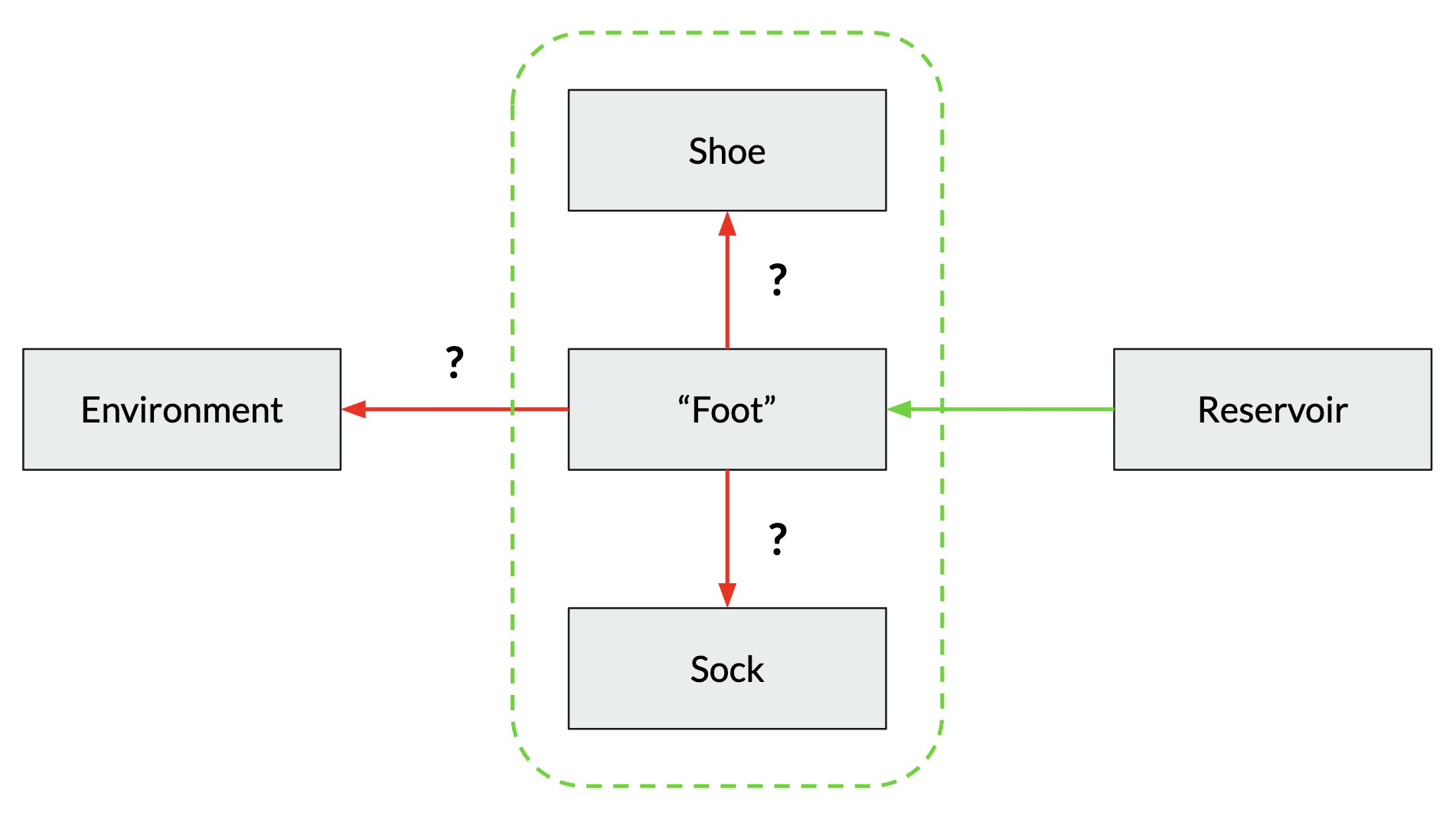
As water exits the reservoir and enters the shoe, it either accumulates in the shoe, sock, and foot, or it evaporates into the environment. So long as we measure the rate at which liquid leaves the reservoir and accumulates in the shoe "system", we can calculate the rate of water vapour transport to the environment.
The solutions
Through my research, I found that the solutions proposed in patents and demonstrated in commercial products and research papers could generally be categorized into two types:
1. The membrane bag
The membrane bag is in fact the solution that Gore-Tex uses in their internal tests. A breathable, waterproof membrane (is it any wonder why Gore-Tex chose this solution?) is filled with water, a heater is then placed inside, and the bag is placed inside of a shoe. The whole system is then put inside of a climate controlled chamber for the duration of the test. The weight of the shoe and bag are measured during the complete duration of the test, yielding the rate of evaporation.
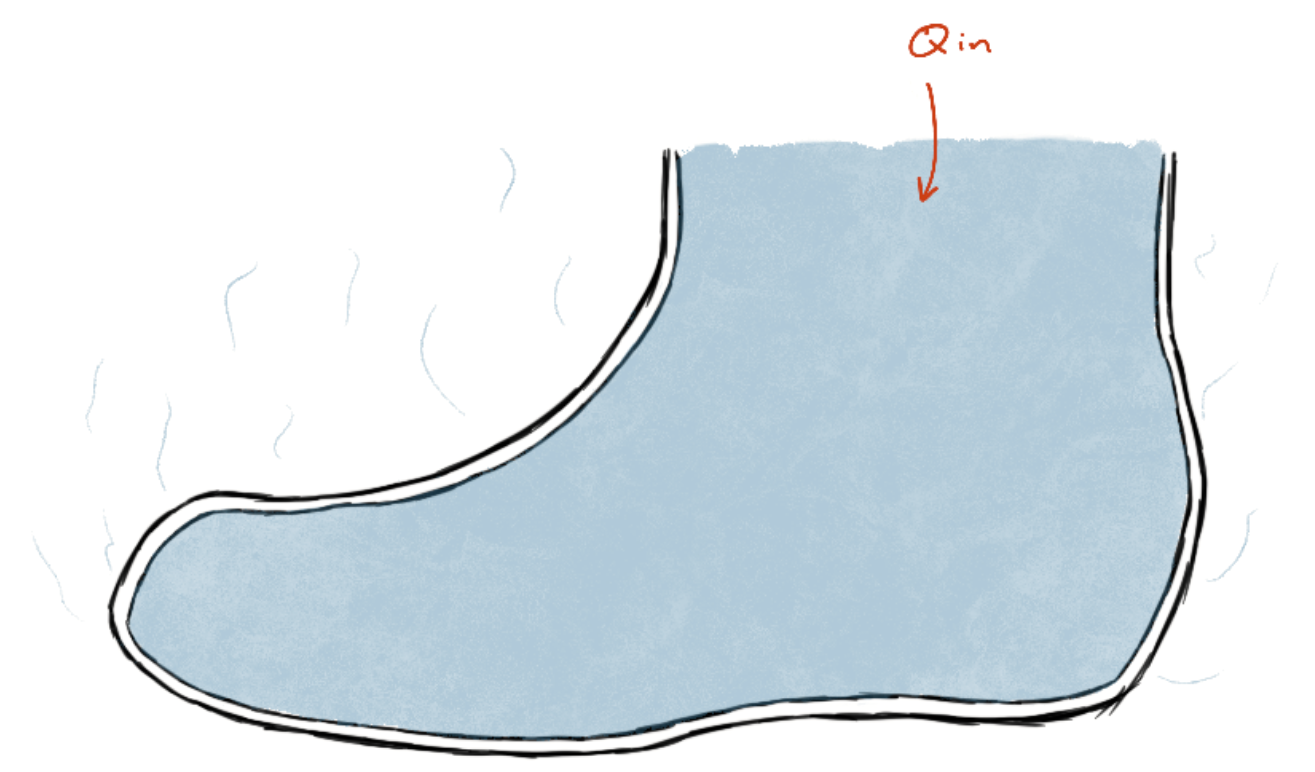
It's simple, cheap, and scales easily to parallelized testing. However, it's not a very good model of the human foot for reasons other than the obvious differences in form. Most importantly, the "sweating rate" of the foot is mediated by the delta in relative humidity and temperature across the membrane:
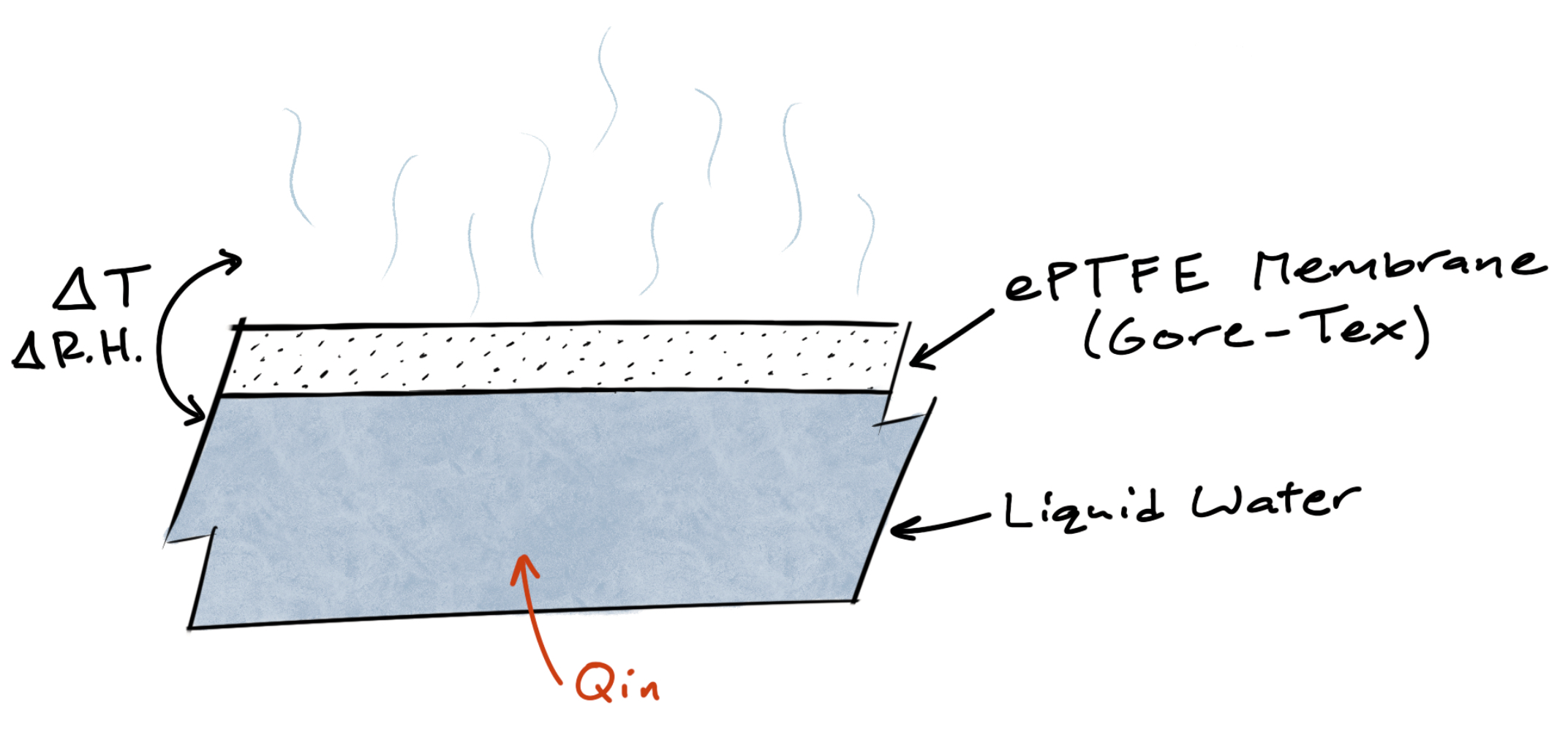
As such, the amount that the foot "sweats" and the distribution of the sweat across the foot is dependent on the shoe being tested, and therefore not anatomically correct.
2. The manikin foot
The manikin foot is a solution that is more commonly used in research and commercial solutions. It generally consists of a rigid, anatomically correct, thermally conductive, heated shell fitted a fabric "skin" which wicks moisture across the surface of the foot.
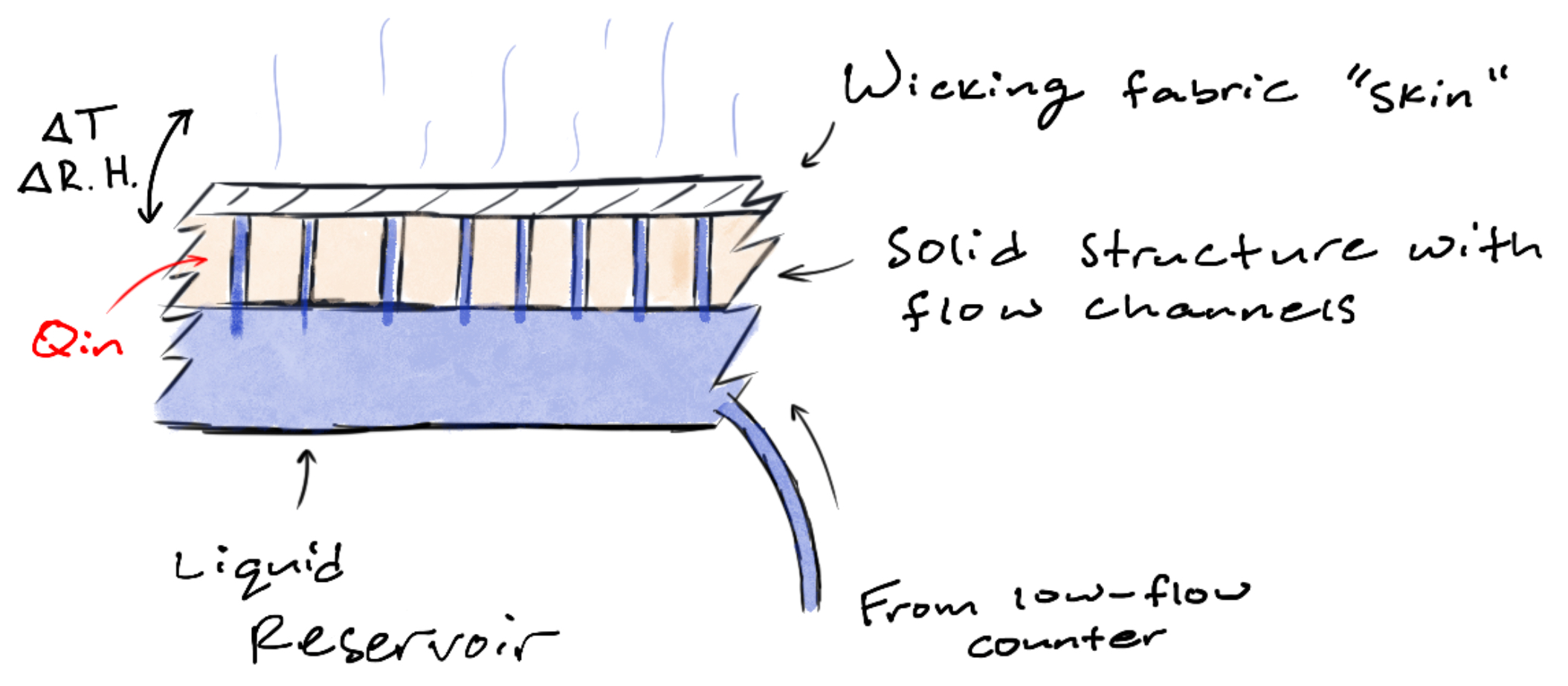
The liquid delivery to the foot as well as the accumulation of liquid within entire foot assembly must be continuously monitored in order to calculate the evaporation rate. This is commonly achieved by delivering the liquid with miniature diaphragm pumps and continuously measuring the weights of the shoe/foot assembly and liquid reservoir.
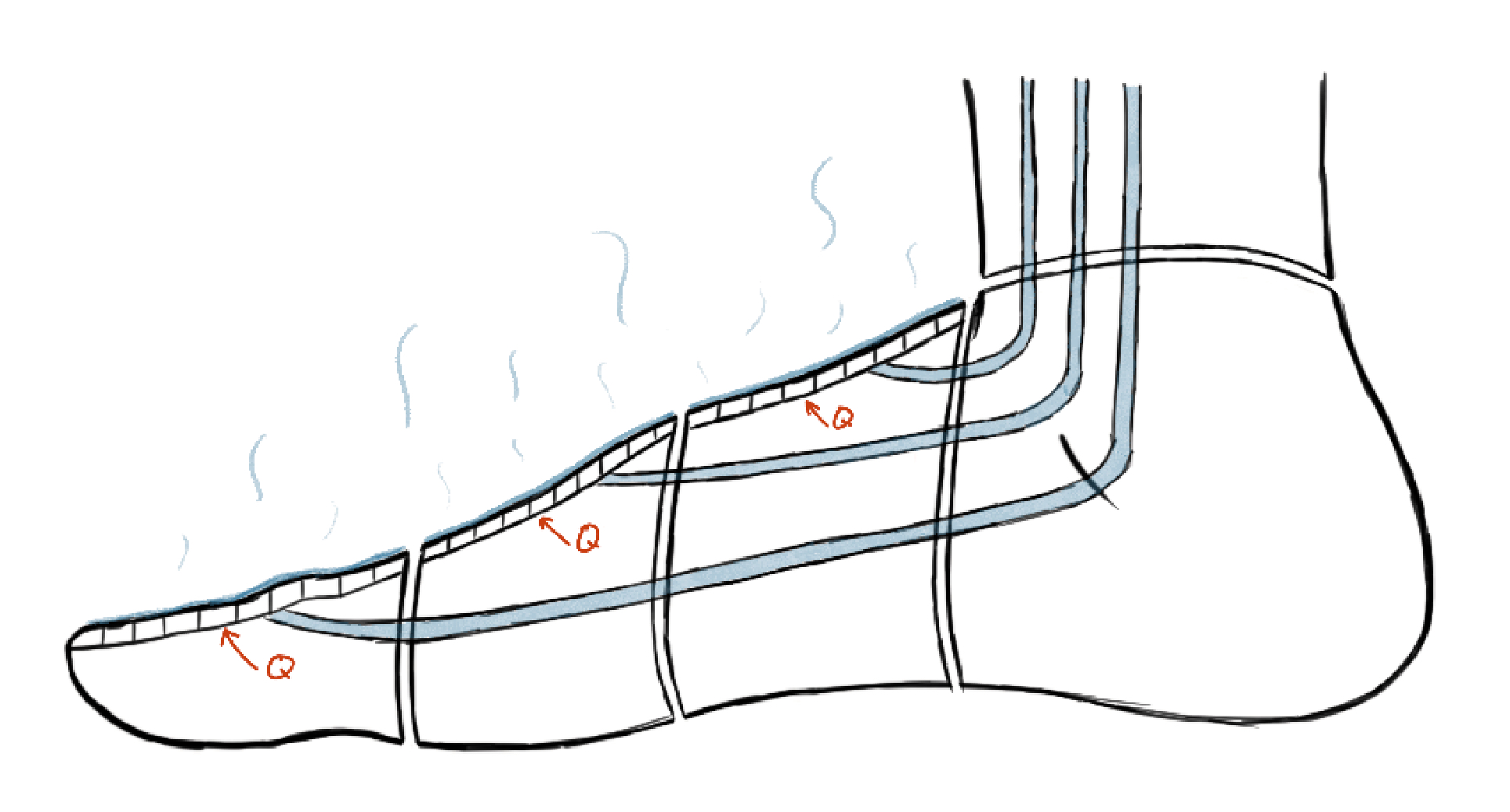
The foot shell can be modeled after 3D scans, and both the sweat and heat distribution can be controlled in zones by pumps, heaters, and thermocouples. Because the temperature and sweat rates are digitally controlled, they can be mapped to react according to an arbitrary control system created by a combination of data from the thermocouples or continuous scale. For example, you could hold the heat addition rate constant and use a PID loop that mediates the sweating rate in order to reach a target foot temperature.
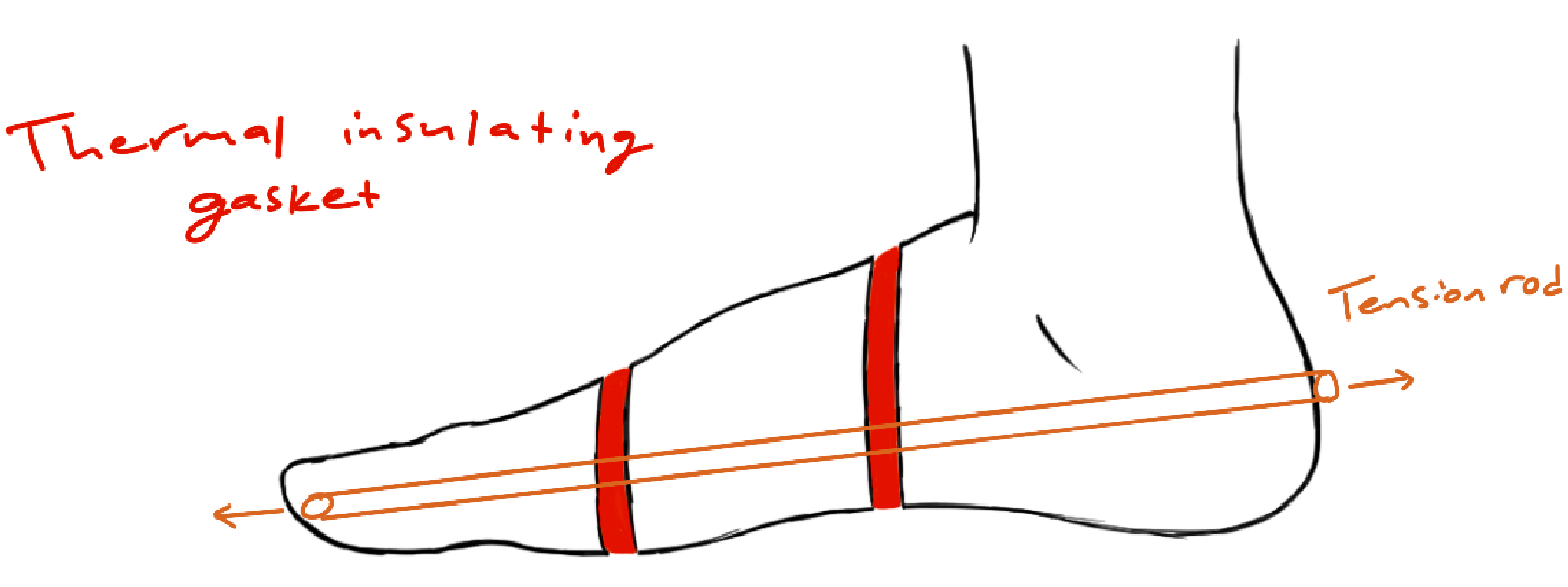
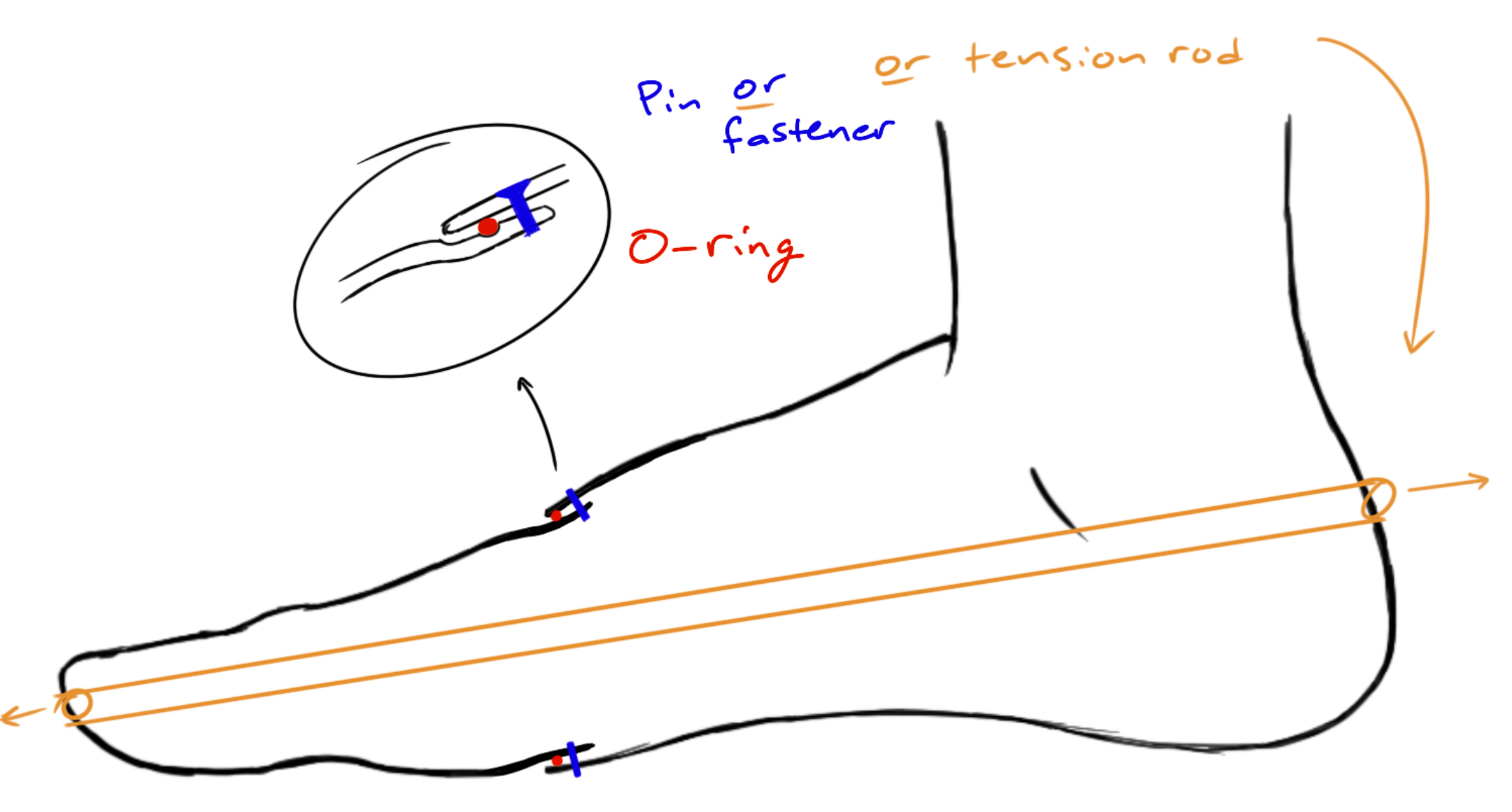
The main downside to this solution is the prohibitive cost, with the majority of the money going to the construction of the foot itself. The construction of the foot presents many challenges including material selection, mechanical design, manufacturing, and assembly. Here are some potential solutions that I came up with during brainstorming sessions to tackle the challenge of assembling a rigid, multi-part shell:
Our solution
As this project is currently used in product development and marketing, I can't share the complete details of the solution. All of the shown sketches are my own, and all of the presented information can be readily found from publicly available sources.